
An obsessively detailed micro-cafe: glued tulips, printed micro-text, and a coffee nerd's Americano benchmark
sandyuraz.com·Aug 31, 2026A mini-cafe built with absurdly careful detail, from the “tiny cafe” table to individually assembled (and glue-secured) tulips and even printed micro text—an experience aimed at people who love meticulous craftsmanship and cozy atmosphere.
The author shares how this painstaking project fits their life: a longtime passion for making/collecting miniatures, plus a daily coffee ritual centered on pour-over brewing and a simple go-to order—an Americano—used as a benchmark for judging any coffee shop’s skill. They wrap up by praising places with transparent, high-quality beans (especially those that roast their own), and hint that this miniature venue would have a secret or two worth discovering.
OpenMontage: an open-source, governance-first AI video production system that turns plain-language ideas into finished videos end-to-end
github.com·Aug 29, 2026OpenMontage is an open-source, agentic video production system that turns a plain-language idea into a finished video end-to-end—handled by your AI coding assistant. It’s not just “generate a clip”: it orchestrates research, scripting, asset creation, editing, composition, subtitles, and QA through structured production pipelines and tool scoring.
The project’s standout feature is governance: it uses explicit quality gates and pre-/post-render self-reviews to reduce broken or “animated slideshow” outputs, with auditable decision logs for provider choices, style rules, and budgets.
OpenMontage also supports multiple creative paths, including:
- AI explainers, cinematic trailers, talking heads, and motion graphics (via Remotion/HyperFrames)
- Real-footage documentary montage by building a corpus from open archives and assembling actual motion into a coherent timeline
- Reference-driven workflows, where you paste a video you like and the agent produces grounded variants with cost and tool-path estimates before production
With optional API keys (and free/local options like Piper TTS and local generation), OpenMontage lets you render videos across common platforms (YouTube, Shorts, TikTok, etc.) using either React/Remotion rendering or HTML/GSAP composition—while keeping runtime choices locked and traceable.
White paper proposes banning resale above face value and capping ticket platform fees at 10% to curb $11B/year in inflated prices
cdn.vanderbilt.edu·Aug 26, 2026Ticket prices for concerts and sports are getting inflated by two kinds of middlemen: professional ticket resellers who flip inventory for profit, and online ticketing platforms that charge large service fees in a captive, near-monopoly setup for each event. Together, the paper estimates these practices add about $11+ billion every year to what Americans pay.
The Vanderbilt Policy Accelerator’s white paper argues for a clear, two-part fix: (1) a bright-line ban on reselling tickets above face value (so consumers can still resell their own tickets at face value or less), and (2) a cap of 10% on platform processing/service fees for both primary and resale markets. It also calls for strong enforcement—including the ability for venues/artists and regulators to take action, plus a private right of enforcement—so these rules are harder to evade.
To make the case, the author breaks down how the modern ticket ecosystem works online, why “convenience” doesn’t require above-face-value scalping, and why fee caps are feasible by pointing to places that already operate under similar limits. The paper also challenges common defenses of the resale industry, including claims about consumer savings, lower counterfeiting risk, and the idea that resale creates “economic efficiency”—arguing instead that resale mainly redistributes money from fans to resellers without increasing supply of the actual event.
Finally, the paper situates the proposal in a longer history of anti-scalping regulation and recent momentum across U.S. states and internationally—suggesting policymakers can pursue solutions through new legislation or the FTC’s authority over “unfair practices,” backed by model legal and regulatory text.

New study finds credit card rewards are funded by interchange fees, effectively making cash users subsidize premium cardholders
library.hbs.edu·Aug 25, 2026Credit card rewards don’t come from nowhere—new research shows they’re funded by interchange fees, and those fees end up redistributing wealth across households. As inflation-weary merchants raise prices to cover payment costs, the burden doesn’t fall evenly: people who pay with cash and debit typically get little to no rewards, while credit card users often receive rewards that more than offset what they effectively pay back through higher prices.
The analysis estimates that interchange fees shift about $30 billion per year, with households paying with cash facing an effective burden equivalent to a 26% higher sales tax compared with premium credit card users at the same stores. The paper traces how this dynamic was shaped by policy changes—especially the Durbin Amendment, which capped debit card fees but ultimately reduced perks and shifted gains toward higher-income consumers who use premium credit cards.
Using transaction data from about 1.8 million merchants, the researchers find a clear pattern: premium card users capture a larger share of rewards while paying a smaller share of the interchange costs, while many debit card users—particularly those affected by regulated fees—bear more of the tradeoff.
The takeaway for business and policy is practical: payment costs are likely to keep shifting as premium card adoption grows, and merchants will need more granular forecasting by location and customer mix. Meanwhile, policymakers considering fee reforms face a key warning—systems designed to protect consumers can still produce regressive outcomes, especially when consumers “self-sort” to merchants that price in their preferred payment methods.
How an expired ENUM DNS delegation let someone intercept hundreds of thousands of phone lookups (even military calls) until the UK NCSC intervened
lina.sh·Aug 22, 2026An old piece of phone-number plumbing called ENUM uses DNS to map E.164 phone numbers to call-routing instructions under the infrastructure domain
e164.arpa. In theory it’s meant to store only routing records—not websites—but because it’s still “just DNS,” it can be misused if nameservers are controlled by the wrong party.This post tells the story of how an expired/delegated nameserver allowed the author to take over multiple country-code
e164.arpazones (covering territories like Saint Helena, Diego Garcia, and Ascension Island). While scanning for weaknesses, they realized that controlling those zones could let someone intercept and reroute phone calls at the carrier-routing layer—at least in systems that still depended on this dead or neglected mechanism.At first, nothing appeared to be happening: no queries showed up for one territory when logging was enabled. But six months later, the logs revealed hundreds of thousands of ENUM lookups across the other two zones—containing full phone numbers, timestamps, and resolver source IPs. The surprising detail: the traffic was largely associated with calls to military bases, meaning sensitive communications could have been exposed for months if someone had chosen to exploit it.
Eventually, the situation was taken seriously by the UK’s NCSC, who gained control of the relevant nameserver infrastructure—turning a bizarre “expired domain” adventure into a real-world reminder that neglected infrastructure can still hide serious risk.
New Europe-wide grants database maps funding options for startups by geography, stage, and sector
humble-lantern-cdb.notion.site·Aug 17, 2026This website is a grant programs database for startups and researchers across Europe, organized so you can quickly find funding based on where you’re located (geography), startup stage (pre-seed/seed/early stage/growth), and startup type (deep tech, digital/AI, biotech, climate/green, etc.).
It covers major public and pan-European funding routes—ranging from R&D grants (to mature technology and prototypes) to blended finance and acceleration programs (to help teams scale). Examples include France’s French Tech Rise and I-Nov, EU-wide instruments like EIC Pathfinder/Transition/Accelerator and Horizon Europe, and country programs such as UKRI/Innovate UK (UK), ZIM (Germany), VLAIO (Belgium—Flanders), aws (Austria), and Vinnova (Sweden), plus options like space-focused ESA BIC and deep-tech challenger funding via Germany’s SPRIND.
The database makes it easier to spot what you can apply for, the typical funding size, and what each program is designed to support—so teams can match their innovation stage and goals to the right funding path.

A Victorian cosmorama marketed luxury estates with immersive, aerial-view displays—decades before modern virtual tours
ianvisits.co.uk·Aug 16, 2026Explore how London’s property marketing got a head start on “virtual tours” long before Rightmove: in the 1840s and 1850s, estate agents Brooks and Green in Old Bond Street used a Victorian immersive display called a cosmorama.
Instead of photographs and floor plans, prospective buyers viewed specially commissioned images of luxury homes and country estates through convex lenses that magnified the pictures and created an illusion of depth—enhanced by carefully controlled lighting to make the experience feel like travel.
Researchers from the University of Exeter found this technique wasn’t just entertainment. It was used to sell a whole experience of seeing a property—with ads describing “hundreds” of estate views from an “aerial perspective,” likely an expensive process limited to prestigious buyers.
Merchants Pay for Everything in Payments: The Shift from Processing to Platform-Driven Value
blog.starpointllp.com·Aug 15, 2026Processor earnings over the past few weeks didn’t move in unison—they highlighted a growing divide inside payments. Some companies (like Adyen and Toast) raised guidance and posted strong momentum, while others (notably Fiserv) cut outlooks, struggled with margins, and faced leadership upheaval. The article breaks down the “why,” arguing that investors may be missing a structural framework for how profits are really shifting across the payments value chain.
At the center is one key idea: merchants “pay for everything” in payments. Merchant costs aren’t just interchange and processing fees—fraud losses, chargebacks, internal acceptance operations, and the value-added services that sit on top of payment rails all matter. But the processor closest to the merchant isn’t capturing the expected share of value because card processing has become increasingly standardized into a commodity.
The author argues that large merchants engineered this commoditization through multi-sourcing. Instead of relying on a single provider, they connect to many processors and route transactions based on price, authorization performance, and uptime—making it hard for any processor to hold leverage. Even “savings” from regulatory changes like Durbin routing often land with the merchant, while processors mainly bear integration and execution costs.
So where does value grow? The piece says the highest-margin opportunities are increasingly tied to complexity—especially in eCommerce. Card-not-present transactions create a bigger need for fraud prevention, risk scoring, orchestration, and optimization. Companies that treat the payment event as an entry point to deeper offerings (software platforms, vertical operating systems, and programmable stacks) can defend take rates because they aren’t just selling movement of money.
This explains the contrast in outcomes across the sector. Toast is presented as the clearest example of “stopping being a processor” and bundling payments inside a restaurant operating platform. Adyen and Stripe are positioned similarly: using the payment moment to solve harder problems merchants actually value. By contrast, processor-heavy models—where hardware or terminals are used mainly to create stickiness—face the risk that merchants can decouple software from processing.
Looking forward, the article argues another major shift is coming: authentication. As network-level authentication, tokenization, and passkeys improve, the fraud and risk layer that processors sell may shrink. That would compress pricing power for processors whose differentiation depends on today’s imperfect ability to verify identity.
Networks like Visa and Mastercard are highlighted as particularly durable because they increasingly monetize authentication and other services as “value added services.” Meanwhile, the processors that struggle will need a stronger answer than processing efficiency alone—because in a world where authentication is handled upstream, the remaining product becomes more “accounting” than value creation.
Finally, the author outlines what to watch in the next few years: product investment levels at lagging processors, ongoing proof of vertical specialization in software-led models, signs of acceleration (or saturation) in network value-added services, and the durability of PayPal’s branded checkout. The conclusion: the widening gap between winners and losers reflects two fundamentally different businesses, even when they wear the same “processor” label.
From Bentwood Chairs to Hidden Champions: The Mittelstand’s Long-Horizon Playbook
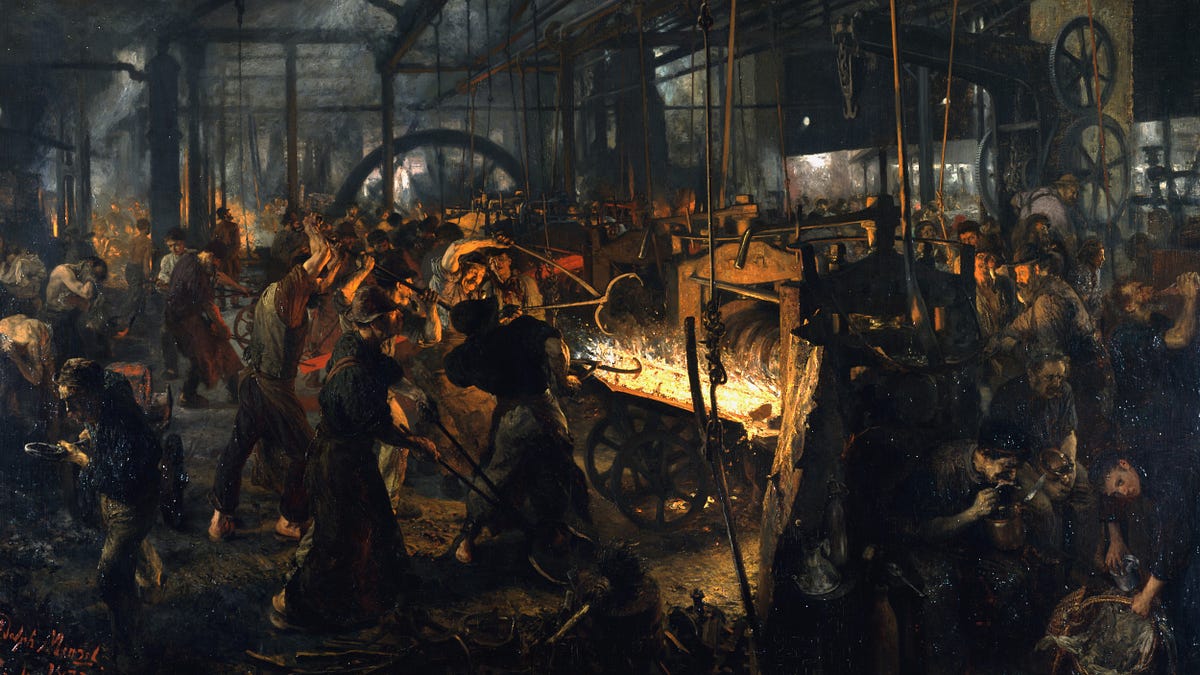
kieranvelasquez.substack.com·Aug 6, 2026A chair in a Czech café turns into a much bigger story: the roots of Germany’s Mittelstand—family-run manufacturers whose impact reaches far beyond the factory gates.
The post follows the chain from 19th-century bentwood chairs (Michael Thonet and “Chair No. 14”) to the rise of factory towns like Bystřice pod Hostýnem, where entire communities were built around production—until wars, nationalization, and political upheaval split fortunes into two separate legacies: Thonet in Germany and TON in Czechoslovakia. The theme repeats elsewhere: businesses survive by embedding themselves in their regions, preserving knowledge, and training workers for the long term.
From there, the author connects medieval guild structures to the modern “Mittelstand ethos,” arguing that it’s less about size and more about an attitude: ownership and management stay closely tied, incentives favor decades over quarters, and culture is treated as a strategic asset. Apprenticeship (Ausbildung) becomes the engine for preserving “tacit knowledge,” while operational discipline shows up as rigor on the shop floor—like finishing everything before starting (“No 80% Rule”) and eliminating waste down to daily routines.
Across factory tours, Mittelstand firms are portrayed as “hidden champions” in specialized global niches—built on patient capital, trust, and craftsmanship—while also investing heavily in their towns (schools, housing, arts, infrastructure). In the end, the story frames Mittelstand not just as an economic model, but as a system that shrinks the distance between work, community, and responsibility—something the author hopes future factories will continue to resemble, especially as technology and automation reshape what work will look like.
about:blank
·Aug 5, 2026
How American Tech Cartels Use Apps to Break the Law
lithub.com·Aug 1, 2026https://36flats.de/
36flats.de·Aug 1, 2026Die Landeseigenen Wohnungsunternehmen | inberlinwohnen.de
inberlinwohnen.de·Aug 1, 2026https://financemate.de/blog/berlin-property-prices-2020-2024
financemate.de·Jul 26, 2026Google Maps
google.com·Jul 24, 2026GitHub - rejourneyco/rejourney: Rejourney is a open source, self-hostable/hosted observability tool for web and mobile apps. Focus on lightweight and performance.
github.com·Jul 14, 2026https://ec.europa.eu/info/funding-tenders/opportunities/portal/screen/home
ec.europa.eu·Jul 11, 2026Context.dev: Web Scraping & Crawl API for AI Agents
context.dev·Jul 9, 2026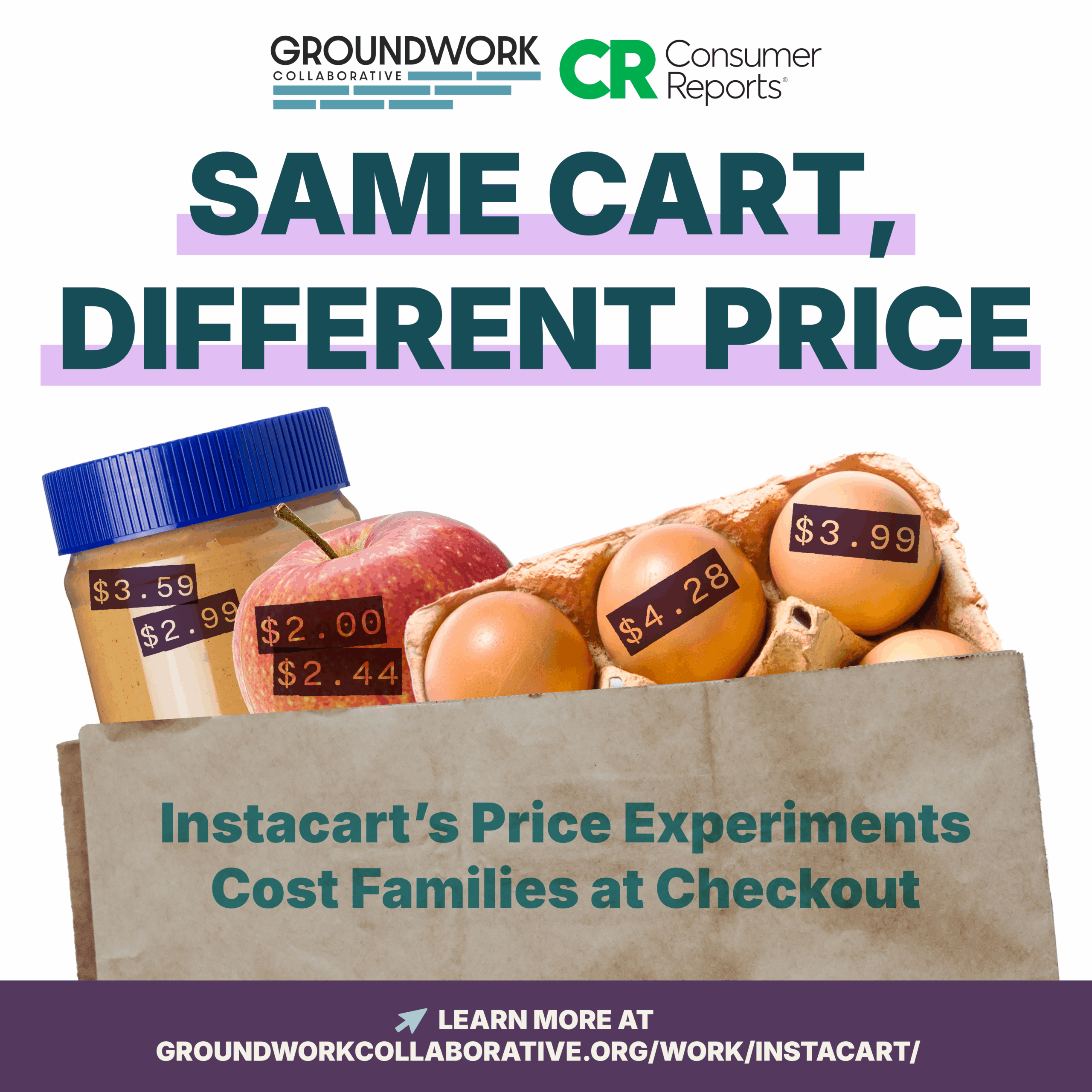
Study finds Instacart uses algorithmic pricing that varies identical groceries across shoppers (up to 23% difference, ~$1,200/year)
groundworkcollaborative.org·Jul 3, 2026A new investigation into online grocery pricing digs into whether Instacart quietly charges different shoppers different prices for the same items at the same time. In live tests across four U.S. cities with 437 participants, researchers found that price variation was common: most groceries showed up at multiple price points, and shoppers’ total basket costs often differed as well. In some cases, the highest price for identical items was up to 23% higher than the lowest—adding up to an estimated potential extra cost of around $1,200 per year for a typical household if those variations repeat.
The report argues this “algorithmic” pricing shift makes grocery costs harder to predict and harder to compare-shop, especially as online grocery becomes the norm. It also examines why the strategy may be happening, including Instacart’s use of AI pricing tools and targeted offers, and it reviews how regulators and states are beginning to respond—through potential enforcement, disclosure requirements, and proposed limits on “surveillance pricing.”
Overall, the story is about what happens when everyday essentials are priced by data-driven experiments rather than one transparent price—whether shoppers notice the difference or not.

Show HN: Taste Skill — an open-source anti-slop frontend framework for AI coding agents with design-system-aware rules
tasteskill.dev·Jul 2, 2026Taste Skill is an open-source “anti-slop” frontend framework for AI coding agents—focused on getting better-looking, more consistent interfaces instead of generic, templated UI.
Built around installable SKILL.md skill files, it plugs into many popular agents (Cursor, Claude Code, Codex, Gemini CLI, v0, Lovable, and others) with a single command. Its goal is to steer the agent with design-system-aware rules: infer the right design direction from the brief, map when to use established systems (Material, Fluent, Carbon, Tailwind, etc.), enforce dark-mode parity, and follow audit-first redesign protocols.
The site also highlights a set of specialized skills (e.g., output completion to prevent half-finished code, style presets like minimalist/brutalist/soft, and image-first or redesign-focused flows), plus an experimental v2 rewrite that ships stricter pre-flight checks and tighter rules—while keeping the same install name for easy upgrades.

The 1995 Berlin Bank Heist: A Tunnel Under Commerzbank That Almost Made a Perfect Escape
morgenpost.de·Jul 2, 2026Die Berliner Morgenpost zeigt in ihrer True-Crime-Reihe „Das dunkle Berlin“ den spektakulären Bankraub in Zehlendorf von 1995: Gangster nahmen 16 Menschen als Geiseln, erbeuteten Millionen und verschwanden – scheinbar unmöglich – spurlos.
Im Mittelpunkt steht der ungewöhnliche Fluchtplan: Die Täter hatten unter der Commerzbank einen Tunnel gegraben, um im richtigen Moment auszutauchen. Die Polizei umstellte die Filiale, führte Verhandlungen, sorgte parallel für die Sicherheit der Geiseln – doch die Angreifer nutzten die Ablenkung der Einsatzlage, um im Kellerraum weiter vorzugehen und am Ende unbemerkt zu entkommen.
Der Fall wird schließlich aufgeklärt: Weil Hinweise und Ermittlungsarbeit doch greifen, geraten die Täter in Widersprüche und werden identifiziert. Der Bericht zeichnet außerdem nach, wie aufwendig der Tunnelbau war – von Bauarbeiten über Rückschläge bis zur engen Passage – und macht klar, wie ein „fast perfektes Verbrechen“ an Details und Ermittlungsdruck scheitert.

How to ask for help from strangers: show your work, keep it small, and make it easy to decline
pradyuprasad.com·Jul 2, 2026Pradyu Prasad breaks down how to ask for help from people you’ve never met—focusing on making your request feel natural, credible, and low-risk for them. The core idea: “put yourself in their mind.” That means leading with what makes you worth helping, especially through proof of seriousness (“show your work”), warm context (e.g., “Steve suggested I reach out”), and using institutional credibility sparingly.
Once you’ve earned their attention, keep your context extremely concise and tied to what they already care about. Then structure the ask to reduce the cost of saying yes: keep it small in scope, make it specific, offer a clear resource (like a short blurb they can forward), and bound it so it doesn’t turn into an open-ended obligation. Finally, make it easy for them to refuse—because the worst outcome isn’t “no,” it’s a reluctant, pressured yes that damages trust.
The post concludes with a firm rule: never lie—since any hint of misalignment can sabotage even the best-crafted request.

From reactive risk management to proactive severity control
parsewise.ai·Jul 1, 2026Move from reactive risk management to proactive severity control. The site focuses on helping teams make better risk decisions by catching issues earlier and managing them based on severity—before they become large losses.
Don’t remove approvals—tune the gate to scale with risk and speed up work
wakamoleguy.com·Jun 30, 2026How to keep approvals from slowing your team down
Some teams try to reduce risk by making major decisions depend on formal approval—but that often turns into an awkward guessing game: does this project “count” as big enough to need the paperwork? The result is either wasted effort building unnecessary business cases or painful delays when uncertainty makes everyone play it safe.
A better approach is to keep the checkpoint required, but make it flexible in how it happens. For high-risk or uncertain initiatives, you still require a proper business case and discussion. For smaller, low-stakes work, a quick lightweight signal (like a brief message) is enough—while still ensuring leadership is in the loop. That shift changes the incentive: people move faster with confidence, because the “worst case” isn’t months lost—it’s a prompt to add more detail if needed.
This isn’t just a product management concept—it shows up in code review, too. PRs don’t all need the same depth of scrutiny: small changes can be approved quickly, while complex ones get deeper review. The key is that the gate exists, but its thoroughness scales with risk.
Takeaway: if approvals feel heavy, don’t necessarily remove them. Instead, adjust the “knobs” behind the gate—required vs. optional, formal vs. flexible—so your process is decisive without becoming a bottleneck.

Vercel launches eve, an open-source framework for production-ready AI agents (agents-as-directories)
vercel.com·Jun 17, 2026Vercel introduces eve, an open-source framework for building production-ready AI agents—so you can define what the agent should do without manually assembling the usual runtime plumbing.
Instead of treating agents like one-off experiments, eve standardizes the “agent plumbing” with features built in, including durable execution (sessions checkpoint and resume after failures), sandboxed compute (agent-written code runs isolated), and human-in-the-loop approvals (pause for risky actions). It also supports subagents, evals for testing, and production-grade visibility.
A key idea: an eve agent is just a directory. Model choice, instructions, tools, skills, subagents, channels (Slack, Discord, HTTP, etc.), and schedules are all represented as files—making an agent readable at a glance and easy to extend one piece at a time.
Eve also makes agent integrations practical: connections to tools and data are configured through OAuth/API/MCP, while channels act as simple adapters so the same agent can work across web chat, messaging apps, and more. Every run generates OpenTelemetry traces, and teams can validate changes via scored eval suites in CI.
If you’re curious how agents go from “it works on my laptop” to “it runs reliably in production,” eve is Vercel’s attempt to make that shift straightforward.

Ploy turns websites into autonomous, always-on growth engines with AI content and experiments
ploy.ai·Jun 17, 2026Ploy is a marketing platform built to turn your website into an always-on growth system—so it keeps improving even when your team isn’t actively working on it.
It works in three stages: Monitor, where it continuously tracks rankings, traffic, content gaps, conversion changes, and competitor activity; Act, where AI agents automatically write new content, fix technical issues, and run experiments; and Surface, where every insight is translated into clear next steps with visibility into who’s visiting and what’s driving results.
Ploy operates with three engines on one platform:
- Web: build and optimize pages, create SEO and ABM landing pages, and improve ad landing performance with built-in analytics.
- Grow: identify and de-anonymize visitors, match intent signals, and coordinate outreach that can sync with your CRM—helping move from attention to qualified leads.
- Ads: generate ad creative at scale and connect impressions to pipeline and closed deals for full-funnel attribution.
The platform also includes “PloyBooks,” pre-built growth strategies (like homepage creation, technical SEO readiness, content page building, AEO-focused comparison pages, and traffic/engagement analysis) that can run on a schedule or trigger-based workflow.
The result: a website that continuously builds, fixes, and converts—while linking marketing actions directly to measurable pipeline outcomes.

OKF: An open, Markdown-based “living wiki” to standardize internal knowledge for AI systems
cloud.google.com·Jun 13, 2026Open Knowledge Format (OKF) introduces a new open specification for how teams package internal business knowledge so AI systems and agents can use it reliably. As foundation models get better, the real bottleneck is often context—schemas, metric definitions, runbooks, dataset notes, and relationships scattered across catalogs, wikis, code, and experts’ heads.
OKF tackles that by standardizing knowledge as a portable “living wiki” stored as plain Markdown files with lightweight YAML front matter. Instead of relying on vendor-specific SDKs or proprietary knowledge services, OKF bundles knowledge in a simple directory structure where each file represents a “concept” (tables, datasets, metrics, playbooks, APIs) and links between files form a graph of relationships.
The article outlines what OKF v0.1 is (just markdown + a small set of agreed metadata fields), why it exists (to end fragmented, siloed context), and how it works in practice. It also shares reference tools: an enrichment agent that generates OKF concepts from BigQuery and documentation, a static visualizer to explore the knowledge graph, and sample OKF bundles like GA4 e-commerce and Stack Overflow—showing how the format can be produced and consumed across systems.
Bottom line: OKF aims to become the “lingua franca” for AI-readable knowledge that can move with your data, evolve in version control, and be shared between different agent builders over time.

How to age well as a man: a practical, science-backed guide to midlife health (diet, workouts, skincare, mental health, hair loss)
theguardian.com·Jun 12, 2026Midlife can bring a confusing mix of changes—metabolism shifts, weaker muscle, skin concerns, mood swings, and even hair loss. This guide breaks down what’s really going on and what men can do, backed by diet, exercise, dermatology, and mental health experts.
- Diet: Men often can’t “diet” the same way anymore—calorie restriction can speed up muscle loss. Instead, the focus is higher protein, more omega-3s, enough key nutrients like magnesium, vitamin D, and zinc, and cutting back on ultra-processed foods, refined carbs, and alcohol. Timing matters too: eating earlier can support sleep and metabolic rhythm.
- Exercise: Walking helps, but the headline is “steps and reps.” Muscle naturally declines in midlife, so strength training is framed as long-term protection for mobility, resilience, and healthy ageing. The NHS recommendation: two resistance sessions per week, plus smart recovery to avoid injury.
- Skincare: Men generally start with a skin advantage, but aging often shows up as deeper lines and lower-face changes—often because SPF usage drops. The basics recommended: cleanse, antioxidant serum, daily broad-spectrum SPF, and at night cleanse + retinoid. For results beyond that, treatments like Botox, fillers (carefully placed), lasers, and microneedling are discussed with an emphasis on subtle, medical, anatomy-aware approaches.
- Mental health: Midlife brings pressure points—work, family strain, isolation—and men are both at high risk and less likely to seek help. The article highlights how changes like testosterone decline can affect mood, energy, cognition, and sexual function, and argues for treatment rather than dismissing symptoms as “just aging.”
- Hair loss: Two major causes are explained—genetic male pattern hair loss and stress-related shedding. Hair care and nutrition (especially protein) matter, and treatments are outlined: start early with options like finasteride (often via prescription) and minoxidil, with transplants positioned as most successful when paired with medication and good scalp care.
AutoSprite turns a single sprite into production-ready spritesheets with in-browser preview and engine exports
autosprite.io·May 1, 2026AutoSprite is a 2D animation tool that turns a single character sprite into fully production-ready spritesheets—fast. Upload one image (or use a preset), choose the moveset you need (idle, walk, run, jump, attack, plus custom moves and directions), then preview everything instantly in your browser.
The workflow is simple: AutoSprite keeps your character aligned while you set animation timing and loop points, and it outputs engine-ready files—PNG spritesheets plus atlas/metadata—so your team can plug assets into their game pipeline without manual slicing or renaming.
It supports exports for popular engines and tools like Unity, Godot, GameMaker, Phaser, Astrocade, and RPG Maker. Plus, reusable presets let teams standardize FPS, looping behavior, and export rules across characters—making iteration and re-exports much smoother when artwork changes.
AI-native software factory: autonomous agents run end-to-end delivery and slash handoffs across the SDLC
xhawk.ai·Apr 30, 2026AI-Native Engineering Org is making a case for the next shift in software development: moving from “AI that helps you code” to an actual “software factory” where agents run end-to-end delivery.
Instead of faster typing and quicker PRs that don’t translate into shorter delivery cycles, the focus is on removing the manual handoffs across the SDLC—planning, coding, review, testing, and deployment. The result is a system where background agents execute continuously in the cloud, triggered by events or schedules, and supported by human guardrails.
Key building blocks include multi-agent orchestration (planner, executor, reviewer), sandboxed execution for safety, a context layer that pulls specs, decisions, and live signals, and workflow integrations with tools like Slack, GitHub, Linear, and JIRA. Agents generate PRs, run tests, and leave an auditable trail, while engineers concentrate on architecture, product choices, and customer impact.
The article also outlines how to get started quickly: connect your repo, configure agents, set triggers (including CI failures and webhooks), and then let the system ship continuously—turning one-off fixes into reusable team capabilities.

DFPAS
Links worth reading
30 links